English
 Italian
 French
 German
 Spanish

The degree of repeatability of EBS balancing machines
The degree of repeatability refers to the capacity of a balancing machine to furnish consistent and reproducible results during balancing measurements and operations. In other words, that measurement indicates how reproducible the measurements and the operations made by the machine are and how reliable and constant the obtained results are.
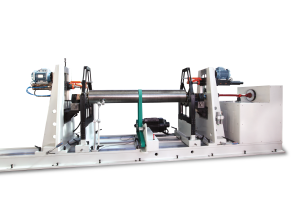 In EBS, the precision of the balancing machines is always measured through rigorous quality tests and the repeatability of measurements that guarantee the quality of our products:
- IMPORTANCE OF REPEATABILITY
Repeatability acts directly on precision and reliability of the balancing process, in fact a reduced repeatability can lead to non-uniform and incoherent results, compromising the performances of the entire system and reducing the life of devices, with possible economic consequences and safety ones.
- METHODS OF EVALUATION OF THE DEGREE OF REPEATABILITY AND TECHNIQUES TO IMPROVE IT
It is possible to evaluate the repeatability degree through the statistical analysis of the data obtained from the repeated tests on the same balancing machine allowing to determine the variability of results and to identify possible problems that affect the repeatability.
To improve it you can:
- Optimize production processes;
- Use high precision and high quality components;
- Reduce possible external vibrations;
- Implement regular and rigorous quality checks;
- Do regular maintenance of the balancing machines and do periodical verifications to guarantee that the machines work well, in order to make possible to identify and solve immediately possible failures;
- Pay attention to the suppliers selection and to the evaluation of specific technics of the components.
If you need to optimize the efficiency and the quality of your production process you can contact us to talk to an expert that will be able to give you all the details regarding the degree of repeatability of our machines.