English
 Italian
 French
 German
 Spanish

The importance of the degree of precision in EBS balancing machines
Within our balancing machines, the degree of precision plays a critically important role in ensuring the correct balance of rotating parts. Lack of precision balancing can lead to unwanted vibrations, premature wear and tear, and possible failure.
The positive impact of the degree of precision on machine performance and service life
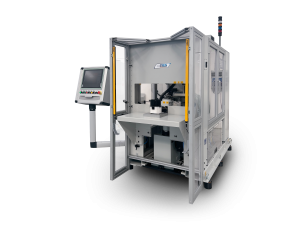
The degree of precision of EBS balancing machines has a significant impact on performance and service life. Adequate precision can ensure accurate balancing, minimizing vibration and part wear. On the other hand, an insufficient degree of precision can lead to residual imbalances, causing premature deterioration of components and a decrease in overall machine performance. In addition, inaccurate balancing can negatively affect safety in the workplace, increasing the risk of breakdowns and accidents. Therefore, investing in balancing machines with a high degree of accuracy is essential to ensure long-term efficiency, reliability, and safety.
Industrial applications and areas of use
EBS balancing machines are widely used in a wide variety of industries, including automotive manufacturing, aerospace, electronics, tool manufacturing, wind turbines, rotating machinery, and many others. In automotive, balancing machines are used to balance crankshafts, wheels, and brake discs, reducing wear and unwanted noise. In aerospace, balancing is essential to ensure the safety and efficiency of aircraft engines. Rotating machinery, such as fans and compressors used in power plants, require high precision in their balancing in order to avoid vibration and structural damage. In general, any rotating machinery that requires high standards of performance and durability can benefit from the use of accurate and reliable balancing machines.
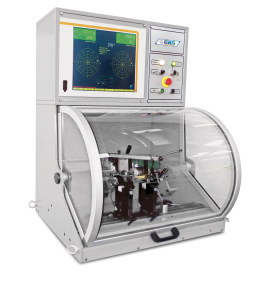
Trends and innovations in the balancing machine industry
EBS constantly strives to develop new technologies to improve the accuracy and efficiency of its balancing machines. Innovations such as the use of advanced sensors and more sophisticated computational algorithms enable greater accuracy in the balancing phase. In addition, there is an increasing focus on integrating automated systems and implementing real-time monitoring technologies to ensure that machines maintain their balancing parameters over the long term. These innovations are leading to more accurate and reliable balancing machines that can meet the increasingly complex needs of modern industry.
To find out all the details about the degree of accuracy of our machines, do not hesitate to contact us, one of our technicians will answer all your questions and curiosity about the matter: sales@ebs-balancing.com